
A Second Comprehensive Care Facility for Children and Families in Apóstoles: When Coordination Sustains the Right to Learn
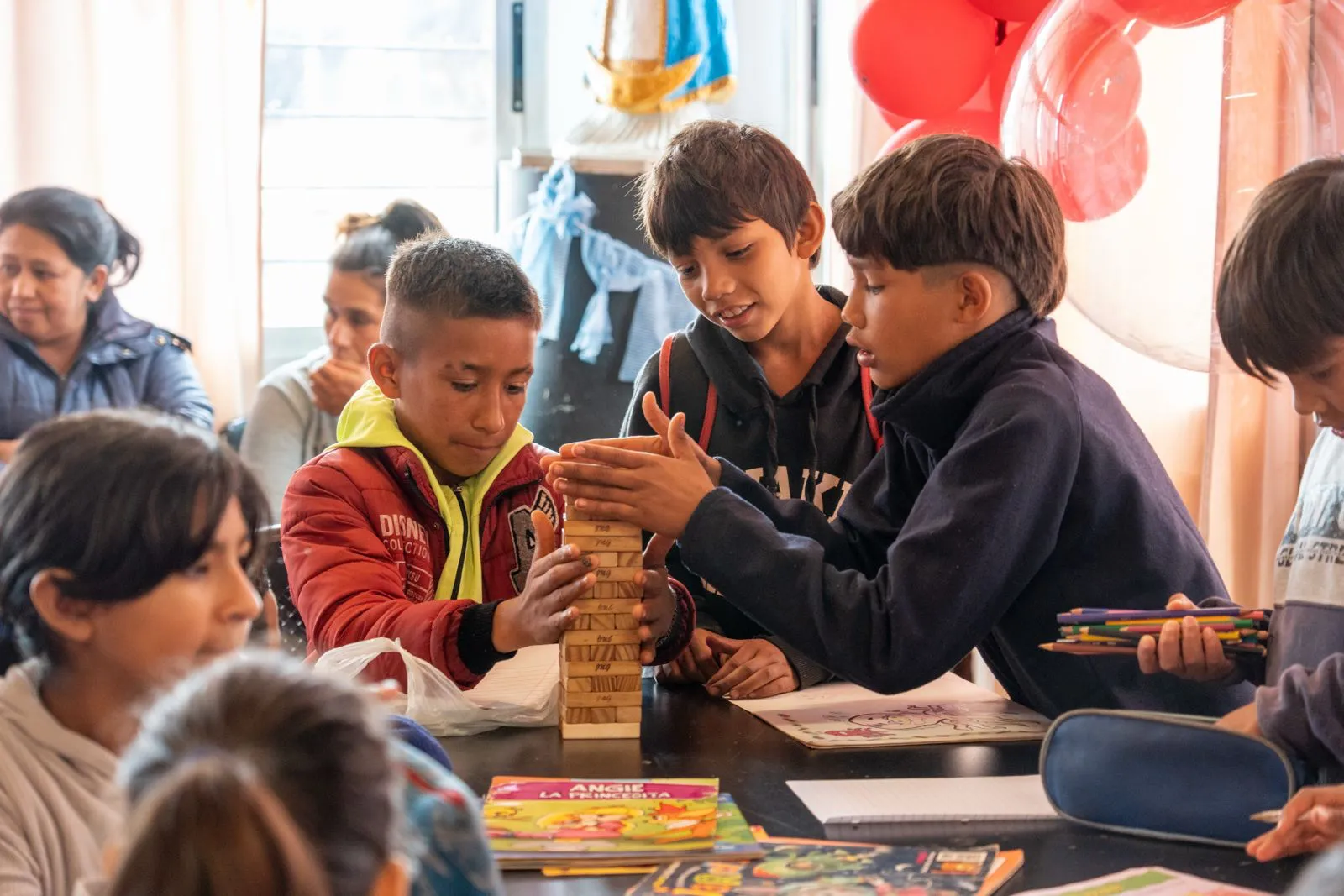
On Thursday, August 20, a new educational space of the Programa Contener opened in the Szczesny neighborhood of Apóstoles (Misiones, Argentina). This opening raises once again a question that has run through DYA's work for more than three decades: what does it take for an educational support space to be more than an isolated experience, and instead something that lasts over time?
Szczesny is one of the neighborhoods with the highest levels of vulnerability in Apóstoles, and in its first few weeks of operation the new space already brought together 35 children. Many of their families work in tasks tied to the region's yerba mate production, with workdays that often run longer than school hours. In response to that reality, the space offers personalized academic support every day of the week to reinforce what school does not always manage to secure (reading, writing, math), recreational and expressive activities that combine play, music, and art, and a place of support and listening that accompanies families during those after-school hours when mothers and fathers are at work.
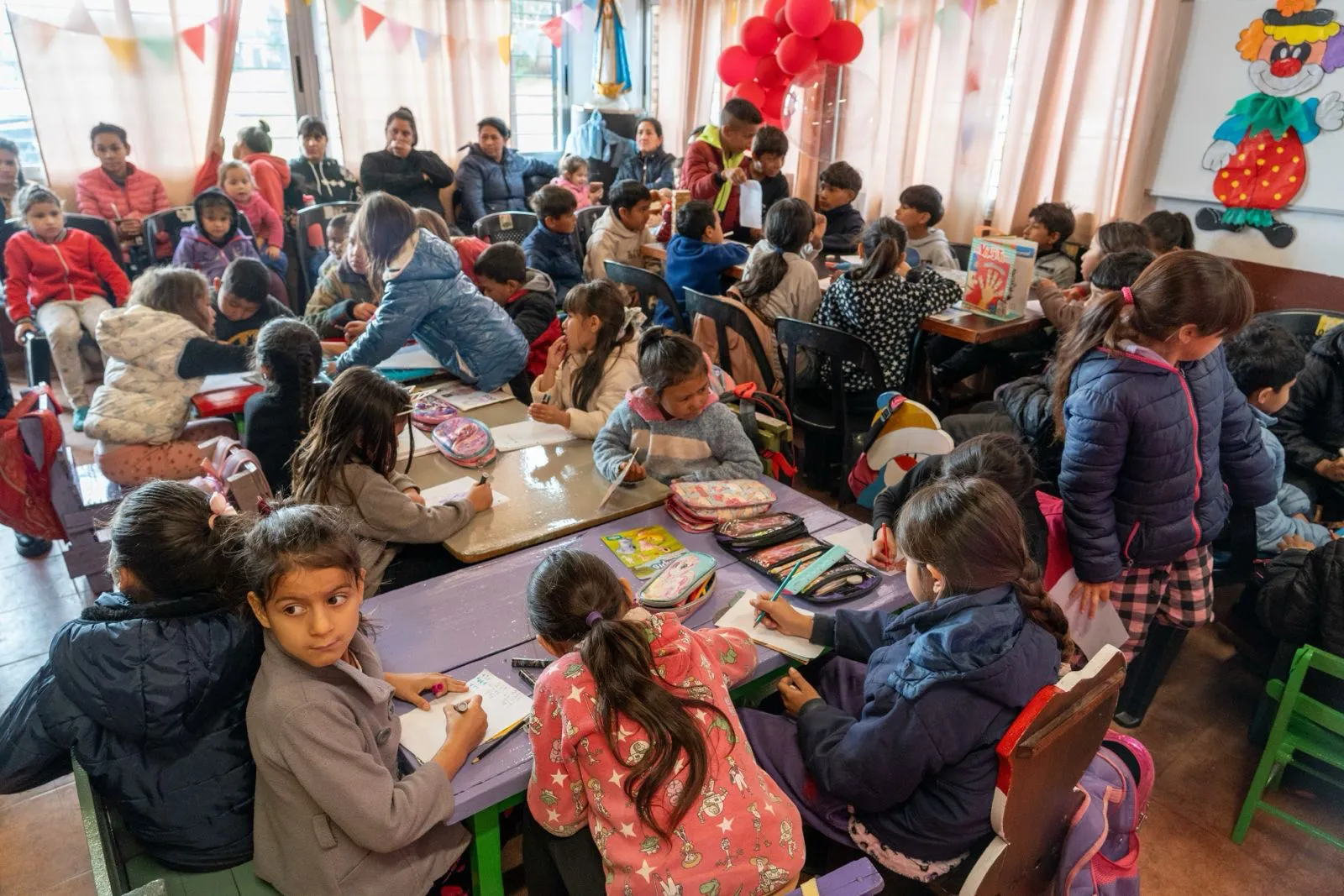
Fabiana Cabral, coordinator of Programa Contener's educational spaces, puts it this way: "We have many families of yerba mate harvesters, and while the parents go to work during the day, they know that here they can trust that their children will learn, will be cared for, will receive a lot of love, and will have a snack to share."
The response to that need, in this case, has a name. This second space was possible because RENATRE joined an alliance already sustained by the Municipalidad de Apóstoles, the Fundación Bronislada Kruchowski de Szychowski, the company La Cachuera, and DYA. Each of these institutions contributes something different, and it is precisely that coordinated diversity that allows the project to exist and to move forward.
This way of working is not a logistical detail. It is a conviction. DYA understands that no single organization, on its own, can sustain over time a response to a problem as structural as access to education in contexts of vulnerability. When different actors (local government, the private sector, and civil society) meet in the same territory and decide to collaborate in a coordinated way, they produce results that none of them could achieve alone. That is precisely the role DYA seeks to play in each of its projects: not as the sole protagonist, but as the party that convenes, accompanies, and sustains the network.
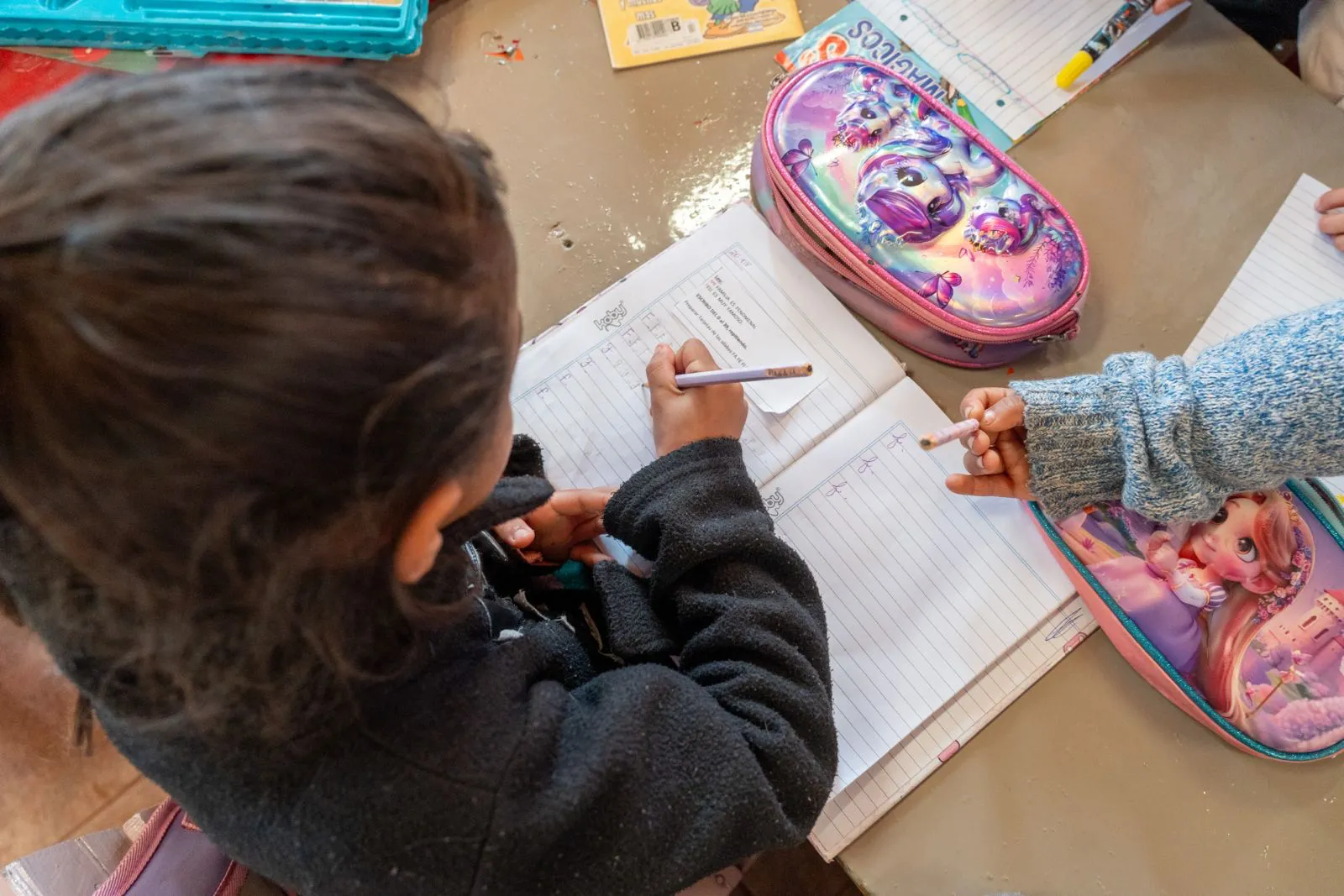
The need for these spaces is not a hunch. Latin America is going through a silent learning crisis, one that did not begin with the pandemic but that the pandemic made worse. In Argentina, Ecuador, and Peru, the three countries where DYA works, an alarming proportion of children finish primary school without the minimum reading and math skills they should have acquired. State responses, where they exist, tend to be patches that fall short of the scale of the problem.
Against this backdrop, DYA's experience across different territories points to something hopeful: recovering lost learning is possible when action is taken urgently, when solutions are flexible and contextualized rather than standardized recipes, and above all when interventions are not sporadic but sustained over time. A space that opens its doors only once is unlikely to change an educational trajectory. A space that endures, that grows, that adapts to families' real needs, can.
That, ultimately, is the deeper meaning of this second space, and of every one that came before it: educational inclusion, as one of DYA's core lines of work, is not sustained from a single place, but from a network of institutions that each decided, from their own role, to commit to the same horizon, that no child should be left behind.