
“What Are We Talking About When We Talk? Learn With Us”: Adolescents Lead an Initiative to Share Learning Among Peers
A process of participation, dialogue, and trust enabled adolescents to transform their learning about wellbeing, rights, and prevention into an initiative built and led by themselves.
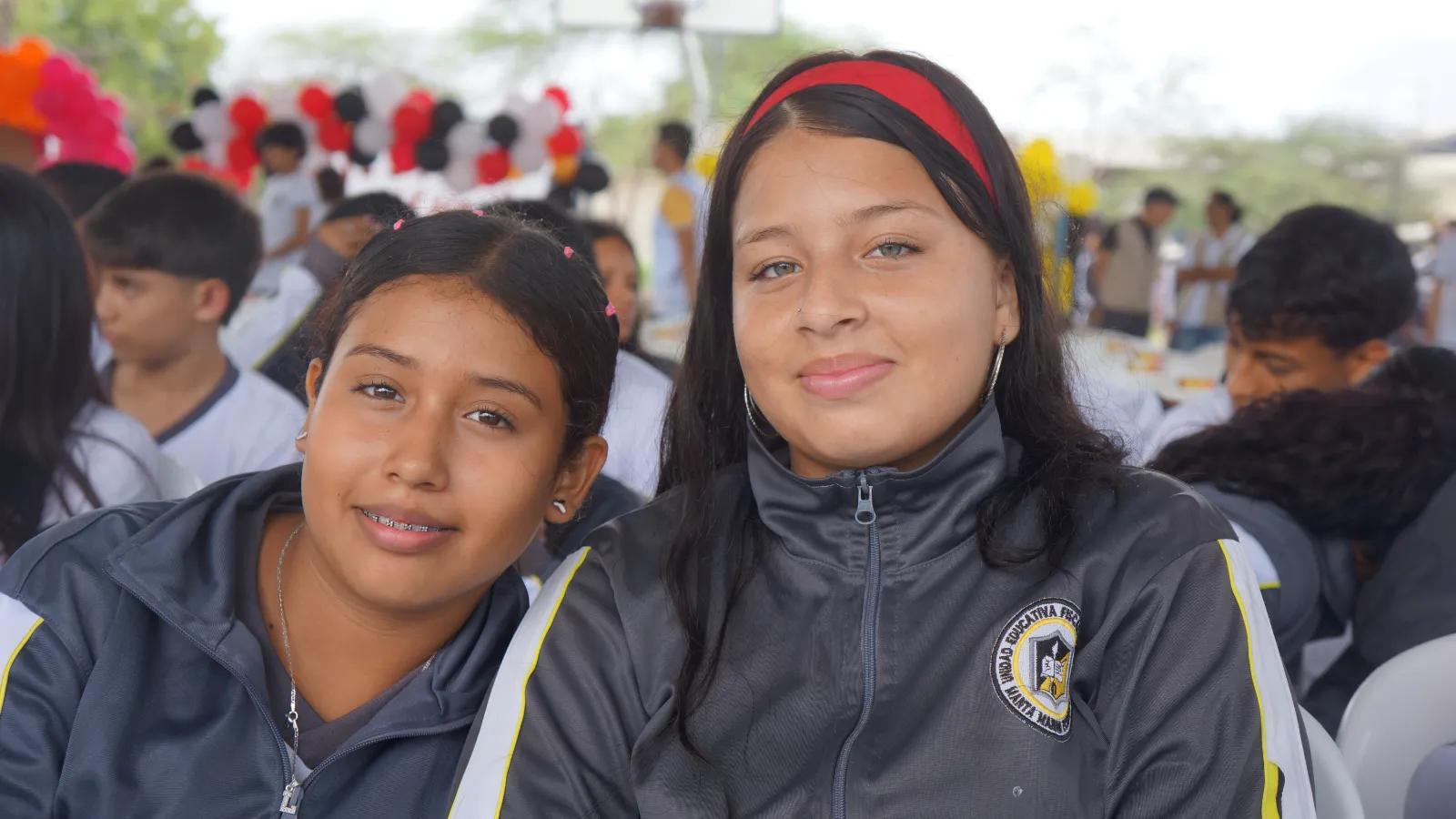
Manta, September 17, 2026. At Unidad Educativa Fiscal Paquisha, the Open House Fair “Amaneceres en Escena: What Are We Talking About When We Talk? Learn With Us” was held as part of an initiative designed and developed by adolescents within the framework of the Amaneceres Program. The event placed first-year upper secondary students, who have been participating in the Program's educational process, at the center of the experience, together with a delegation of tenth-grade students who recently joined the program.
The fair was the result of a process developed over several months, during which the adolescents participated in learning and reflection spaces focused on mental health, rights, healthy relationships, consent, sexual and reproductive health, and adolescent pregnancy prevention. Building on these learnings, during August and September they organized teams, distributed responsibilities, and designed games, activities, and educational materials to share their knowledge with other students.
The process sought to strengthen adolescents’ ability to engage in dialogue, express their opinions, make informed decisions, and become multipliers of learning within their school community. With the support of teachers, tutors, and DYA’s technical team, each group decided what they wanted to communicate and how to present it in a meaningful and participatory way.
One of the central moments of the event was the conversation “What Are We Talking About When We Talk?”, a space where the adolescents took the floor to share their experiences, learnings, and reflections on their participation in the Amaneceres Program, as well as on the importance of having safe and trusting spaces to talk about what they feel, think, and experience.
When adolescents’ voices are part of decision-making
For Juan Samaniego, Executive Director of DYA, the experience reflects a different way of fostering change in schools:
“Sustainable transformations are those that integrate the voices of young people, teachers, and families. Lasting changes are built through decisions and agreements and through their capacity for dialogue and listening. At an event held last week, the adolescents’ voices resonated: they said they feel good when they can express what they feel, and that they see a future with greater certainty when they learn to make decisions knowing that their voices and opinions are heard and valued.”
From this perspective, adolescent pregnancy prevention and mental health are not limited to the transmission of information. Trust, respect, recognition of differences, and the opportunity for adolescents’ voices to be heard are central to the methodology of the Amaneceres Program.
The experience at U.E.F. Paquisha shows how educational spaces can become environments for adolescent participation and leadership. When adolescents have opportunities to express themselves, organize, and share what they learn, they are no longer simply recipients of educational processes—they become protagonists in them.
Through the Amaneceres Program, DYA reaffirms its commitment to promoting comprehensive processes that place adolescent wellbeing, participation, and the exercise of rights at the center. Adolescent pregnancy prevention and the strengthening of mental health are key areas of this work, recognizing that both require the creation of trusting spaces, the development of decision-making skills, and the promotion of protective environments.
This approach is built through coordinated work with educational institutions, families, the health sector, and other community stakeholders, recognizing adolescents as protagonists of the processes that affect their lives and communities.
- Learn more about Amaneceres Program